Friday, August 12, 2011
Friday Book Beginnings
How to participate: Share the first line (or two) of the book you are currently reading on your blog or in the comments. Include the title and the author so we know what you're reading. Then, if you would like, let us know what your first impressions were based on that first line, and let us know if you liked or did not like the sentence. The link-up will be at A Few More Pages every Friday and will be open for the entire week.
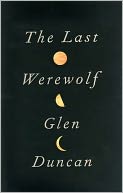
The title: The Last Werewolf
Author: Glen Duncan
"It's official," Harley said. "They killed the berliner two nights ago. You're the last."
A nice beginning. I'm really excited to read this book! I finally finished To the Lighthouse, The Sheltering Sky and I'm very close to the end of The Masque of the Black Tulip.
Has anyone read this? And if so, did you like it?
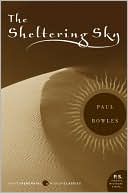
The Sheltering Sky by Paul Bowles
I really enjoyed this book after putting it off for soooo long. It was given to me as a gift and it took me about 4 years to pick it up and finally read it and I am glad that I did. This story was beautifully written and gave me a very real sense of the place, but also of the period in which it takes place. I had a very distinct impression of who these American expats were with their inevitable philosophical soul-searching, and bland indifference to the culture of the Arabs. I knew them and yet I did not for they barely knew themselves.
The story centers on Kit and Port Moresby and their tag-along friend, Tunner. Tunner is impressed with them and a bit in awe of them initially and is probably how he came to be travelling with them. They must have initially sensed his admiration, and let him come along in order to detract attention from themselves and their crumbling relationship, although the author never dicloses exactly how the two became three.
The theme of this novel could be emptiness; the emptiness they felt within themselves, the emptiness in their relationships to each other or the emptiness that they find in northern Africa while they're searching for exactly the opposite. They want to be fulfilled emotionally, culturally, and intellectually. Also, the emptiness of the expansive and desolate desert, which plays such an important part of this book, it's practically another character in the novel. Indeed, the theme of emptiness comes up frequently when searching discussion groups online.
But it's the symbolism of walls throughout the book which is very powerful for me. Whether they are the walls of a city, the walls or parapet by which Port escapes from the Arab men after the episode with Mahrnia, the walls that their society puts up around them and from which they are fleeing, the walls in his relationship with Kit, the walls that Kit puts up all around herself in order to deal with the unforgettable potential threats and tragedies that she feels are awaiting her at every turn, the wall of Eric Lyle who isn't able to be himself. The prison like walls of Belquassim's house for Kit and finally the walls that her are her madness in the end.
There is much to discuss in this novel. I had chosen it for my library reading group and then unfortuantely was not able to attend the discussion held about it. I was told that they had a lively discussion about it despite the fact that most of them did not enjoy the book. It's a shame they didn't enjoy it as much as I did. But at least it got them talking! Now I am looking forward to seeing the movie.
Friday, July 22, 2011
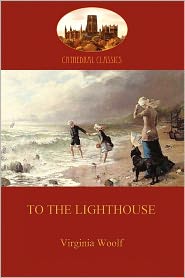
To the Lighthouse Read-a-long Week 3
We are almost finished with To the Lighthouse by Virginia Woolf, a read-a-long hosted by Unputdownables.net
This week the reading was, if possible, even more dreamlike to me than before. We started off the reading back at the dinner table with Mrs Ramsay's neurosis. Her anxiety has extended to even the fruit bowl, which she's "jealously" guarding, hoping no one would ruin it by taking a piece of fruit from it. Although, if I remember correctly, she is hoping the composition won't be ruined because Rose has arranged. In fact, she glances at Rose "in sympathy".
Her gaze alights on Prue, whom she telepathically promises will one day be happier than the newly engaged Minta. And why will Prue be happier? Because she is Mrs Ramsay's child. Oddly, I don't think this is an example of Mrs Ramsay being full of herself. She is always thinking of her children. At one point, early on in the book she says she wishes she could always have a baby in her arms. Another time, she thinks sadly how she wishes they could stay the way they are because they will never be as happy as they are. While Mr Ramsay may at times consider what his writing career would have been like had he not had such a large family, Mrs Ramsay strikes me as completely the opposite. She is very attached to her children. When she goes to check on James and Cam and finds them still awake, she soothes them with stories and gently coaxes them to sleep. She hopes that Charles Tansley, who is staying in the room above Cam and James, won't awaken them by dropping some book. She is so obsessed by this idea that he is the clumsy type that would drop a book, that later she can't recall if he's actually done it or not.
The second part of this reading takes place after 10 years have passed. This is a dreamlike sequence for me. An elderly woman is cleaning up the neglected house and getting ready for the Ramseys return. Only this time Mrs Ramsay is absent, and so is Andrew, who has died in the war, and so is Prue, Prue, who was supposed to be happier than Minta, has died in childbirth. But Lily Briscoe is back, and she takes up painting out on the lawn, just as she did 10 years before. Lily's description of creating and painting on pages 158-159 must surely be Ms. Woolf's own thoughts and frustrations with her art.
Lingering questions in my mind:
Was Mr Ramsay looking for more than sympathy from Lily? And was he a little flirtatious with Minta at dinner?
Mrs. Ramsay died suddenly. I wonder how.
Friday Book Beginnings
How to participate: Share the first line (or two) of the book you are currently reading on your blog or in the comments. Include the title and the author so we know what you're reading. Then, if you would like, let us know what your first impressions were based on that first line, and let us know if you liked or did not like the sentence. The link-up will be at A Few More Pages every Friday and will be open for the entire week.
The title: The Masque of the Black Tulip
Author: Lauren Willig
I bit my lip on an "Are we there yet?"
If ever silence was the better part of valor, now was the time. Palpable waves of annoyance emerged from the man beside me, thick enough to constitute an extra presence in the car.
The Masque of the Black Tulip is the sequel to The Secret History of the Pink Carnation, which I thought was a fun read. I expect The Black Tulip to be similar and a welcome respite from the profound and fearsome To the Lighthouse, which is what I'm reading as a read-a-long with Unputdownables.net
Tuesday, July 19, 2011
A Gothic Reader
Well, here's to starting over. My toddler just erased my post. Why is the cancel button right there at the edge of the computer within easy reach of her little fingers?
I've started to think that, while blogging itself is time consuming, it's actually the reading of all the other blogs that is taking up what little reading time I have these days. I absolutely loooove reading all of the wonderful, interesting blogs out there and hearing what readers around the world think of not only my favorite books, but their favorites, and also discovering new books from them, but I seem to be reading books less and less! In fact, like so many, I am constantly adding to my TBR list, which only lists a fragment of what I actually want to read. I'm almost afraid to list it all, as I feel I will be completely overwhelmed and tortured with anxiety. Brings to mind a similar situation back in 1999 when I got a job at Waldenbooks, which was when I first realized there were so very many books I was dying to read, yet so little time.
It was while reading a blog recently that I was reminded how much I love a good gothic tale. My bookshelves are crammed with Wilkie Collins, the Brontes, the Post-Gothic Edgar Allen Poe, Daphne Du Maurier and numerous volumes of English ghost stories, but I have read neither The Castle of Otranto, nor The Mysteries of Udolpho, both being de rigueur for any lover of gothic. I am ready to remedy that situation. I have ordered both of these novels along with a few others. Now if I can just get off the blogs and back to the books...
Friday, July 15, 2011
To the Lighthouse Week 2
To the Lighthouse has now become a bit addicting. I find myself eager to get back into these people's heads! I'm enjoying following the streams of consciousness because Virginia Woolf has a way of rooting out certain truths about ourselves that we are either oblivious to or seek to obscure, but which we immediately recognize in her characters.
I, for one, see something of myself in almost everyone so far, and unfortunately sometimes it's in their silliest, pettiest thoughts that I find myself thinking, "I can relate to that!"
The dinner scene in which we hop about from one head to the next is wonderfully intimate. I just hope the book will not end leaving me with too many unanswered questions.
Someone I would like to know more about is Mr Carmichael. Why does Mrs. Ramsay continually mention that he doesn't like her?
Wednesday, July 13, 2011
The Secret History of the Pink Carnation by Lauren Willig
From the Publisher:
Deciding that true romantic heroes are a thing of the past, Eloise, an intelligent American who nonetheless always manages to wear her Jimmy Choo suede boots on the day it rains, leaves Harvard's Wiedner Library bound for England to finish her dissertation on the dashing pair of spies the Scarlet Pimpernel and the Purple Gentian. What she discovers is something the finest historians have missed: the secret history of the Pink Carnation--the most elusive spy of all time, who saved England itself from Napoleon's invasion.
The Secret History of the Pink Carnation opens with the story of Eloise Kelly settling in to read the secret history. But before Eloise can unmask the Pink Carnation, she uncovers a passionate romance that almost threw off the course of world events. How did the Pink Carnation save England? What became of the Scarlet Pimpernel and the Purple Gentian? And will Eloise Kelly find a hero of her own?
My Thoughts:
Being a huge fan of historical fiction, and The Scarlet Pimpernel in particular, this sounded like the perfect story for me. While it had an intriguing plot, and likeable characters, at times it was somewhat silly and often downright ridiculous. That being said, the story did compel me to keep reading as I wanted to discover who The Pink Carnation was, and I enjoyed the budding romance between the main characters. Although the descriptions of the female protagonist(s) were often annoying as she was frequently "breathless" blushing, or biting her lips in consternation all the while, unbeknownst to her, driving her love interest mad with desire...At times I just found it mawkish.
(There is some sexual content so be forewarned if you're not into that)
The story utilizes third person multiple vision POV and goes back and forth between the early 1800's in Paris post Revolution, and modern day London. There are three POV characters. The first is Eloise, an American Harvard Graduate student working on her dissertation, which is about the two English spies, the Scarlet Pimpernel and the Purple Gentian. She's gone to London to find out what she can about a third spy, the Pink Carnation, the most elusive English spy in Napoleonic France. The only person willing to assist her is an elderly aristocratic descendent of the Purple Gentian, who, of course, has a gorgeous nephew, Colin, who does not want Eloise to have access to the family archives. Nevertheless, the aunt allows Eloise full access to it all. So, while Eloise reads these family letters, diaries, etc..we are transported to the early 1800's where we encounter Amy, the second POV character, who is half French but has been raised in England after losing her French father to Madame Guillotine, and Lord Richard Selwick, the third POV character, the Purple Gentian and Colin's ancestor.
I enjoyed the multiple POV aspect, I usually do, but I know that certain readers can find it frustrating and confusing. In this particular novel it is very straight forward and not at all confusing. The story is a simple one, albeit entertaining, which would make it an ideal beach read, and which is why I picked up the sequel, The Masque of the Black Tulip. I'm quite sure that it's going to be much the same as this one, which means it will be entertaining. And that's what I like after all---to be told a good story.
Deciding that true romantic heroes are a thing of the past, Eloise, an intelligent American who nonetheless always manages to wear her Jimmy Choo suede boots on the day it rains, leaves Harvard's Wiedner Library bound for England to finish her dissertation on the dashing pair of spies the Scarlet Pimpernel and the Purple Gentian. What she discovers is something the finest historians have missed: the secret history of the Pink Carnation--the most elusive spy of all time, who saved England itself from Napoleon's invasion.
The Secret History of the Pink Carnation opens with the story of Eloise Kelly settling in to read the secret history. But before Eloise can unmask the Pink Carnation, she uncovers a passionate romance that almost threw off the course of world events. How did the Pink Carnation save England? What became of the Scarlet Pimpernel and the Purple Gentian? And will Eloise Kelly find a hero of her own?
My Thoughts:
Being a huge fan of historical fiction, and The Scarlet Pimpernel in particular, this sounded like the perfect story for me. While it had an intriguing plot, and likeable characters, at times it was somewhat silly and often downright ridiculous. That being said, the story did compel me to keep reading as I wanted to discover who The Pink Carnation was, and I enjoyed the budding romance between the main characters. Although the descriptions of the female protagonist(s) were often annoying as she was frequently "breathless" blushing, or biting her lips in consternation all the while, unbeknownst to her, driving her love interest mad with desire...At times I just found it mawkish.
(There is some sexual content so be forewarned if you're not into that)
The story utilizes third person multiple vision POV and goes back and forth between the early 1800's in Paris post Revolution, and modern day London. There are three POV characters. The first is Eloise, an American Harvard Graduate student working on her dissertation, which is about the two English spies, the Scarlet Pimpernel and the Purple Gentian. She's gone to London to find out what she can about a third spy, the Pink Carnation, the most elusive English spy in Napoleonic France. The only person willing to assist her is an elderly aristocratic descendent of the Purple Gentian, who, of course, has a gorgeous nephew, Colin, who does not want Eloise to have access to the family archives. Nevertheless, the aunt allows Eloise full access to it all. So, while Eloise reads these family letters, diaries, etc..we are transported to the early 1800's where we encounter Amy, the second POV character, who is half French but has been raised in England after losing her French father to Madame Guillotine, and Lord Richard Selwick, the third POV character, the Purple Gentian and Colin's ancestor.
I enjoyed the multiple POV aspect, I usually do, but I know that certain readers can find it frustrating and confusing. In this particular novel it is very straight forward and not at all confusing. The story is a simple one, albeit entertaining, which would make it an ideal beach read, and which is why I picked up the sequel, The Masque of the Black Tulip. I'm quite sure that it's going to be much the same as this one, which means it will be entertaining. And that's what I like after all---to be told a good story.
Subscribe to:
Posts (Atom)